Build the test around the experience. Follow a fictional task through to the evidence available for review.
Stage 1 of 4: The task.
Illustrative explanation. Fictional tasks, screens and responses. No research data is collected or sent. These are two separate examples, not a shared implementation.
Try a fictional field note. Keep what happened separate from what you think it means.
Loading the logger…
One note. Two different kinds of information.
What happened
Your interpretation
These are the current demo record’s values. Empty fields stay empty.
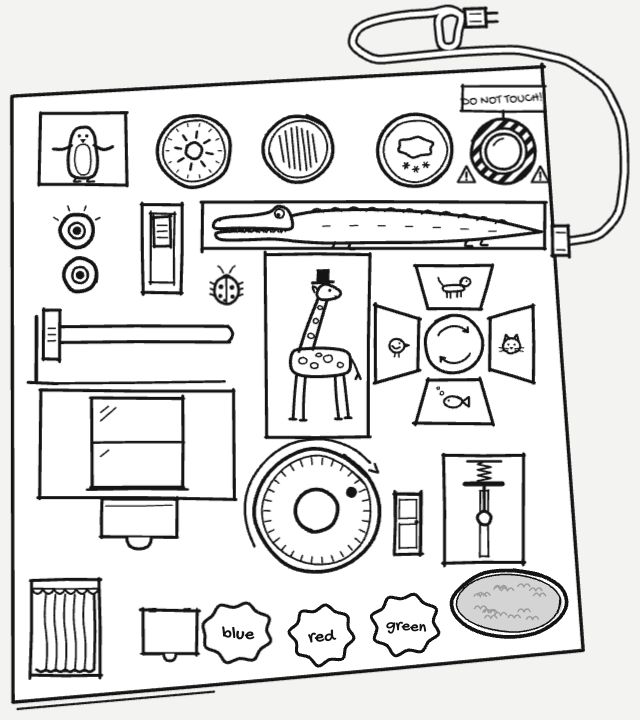
Poke, pull and discover what changes. An experiment in touch and cause and effect.
The control and the object it changes light up together. Try the weather buttons and notice how the penguin reacts.
A different touch, a different response.
The board brings pressing, pulling, sliding and turning into one place. The question is whether children notice the connections and explore them together with an adult.
A working prototype intended for a young child and an adult to explore together. It hasn’t been tested with children yet.
Find four letters, build a spell and wake the sleeping pen.
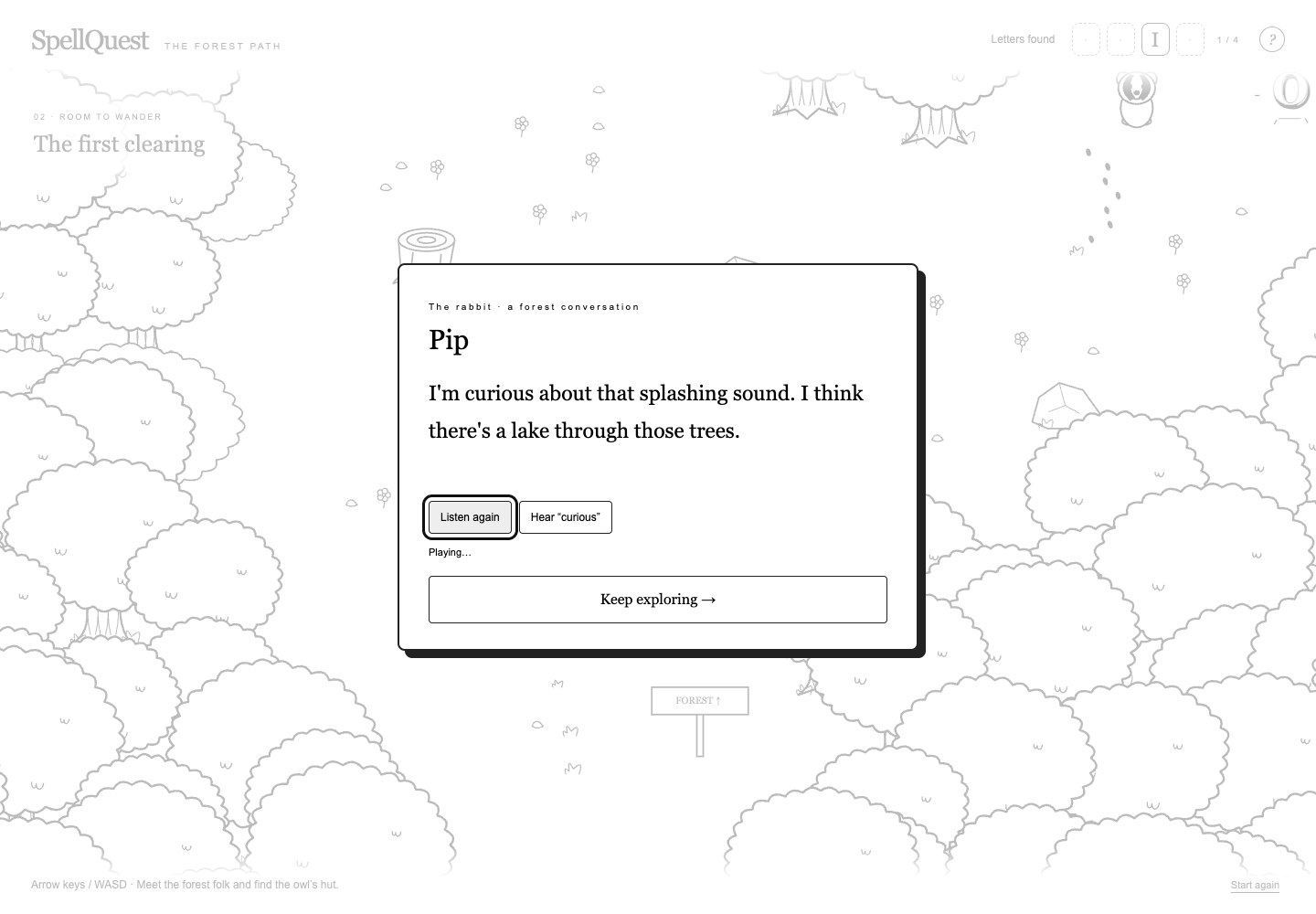
Pip uses curious in conversation. The word arrives with a meaning.
2 Hear it again.
Replay the conversation or listen to the word on its own.
3 Keep exploring.
Return to the forest. The encounter can be revisited.
Why I designed this encounter
Five research interviews informed the early direction. The research highlighted the need for context and repeatable audio.
Characters introduce words through short conversations, with written text and speech. Children can listen again, hear the word on its own, or leave and return. The intention is to make help available without making every encounter a test.
These are design intentions. The prototype still needs testing with children.
Make room to change your mind.
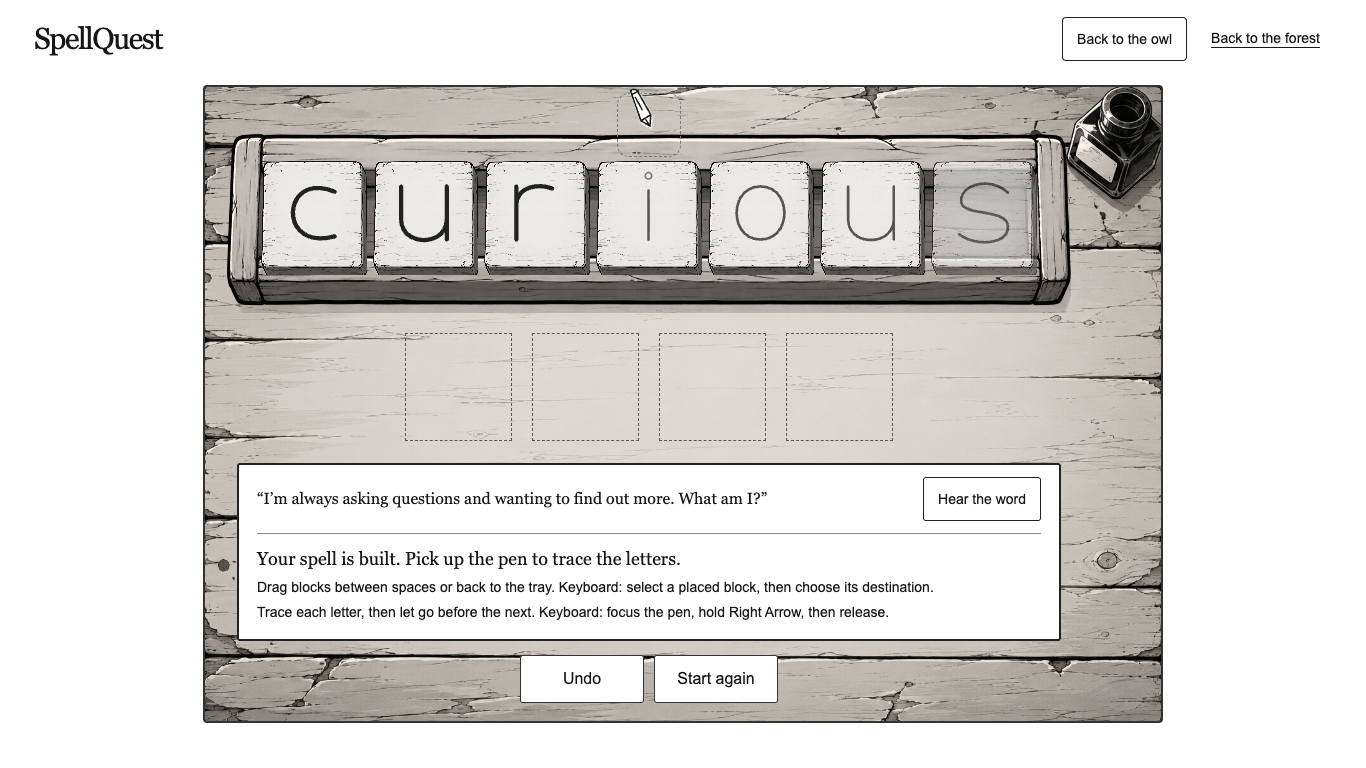
Confidence and the response to mistakes mattered in the research. At the bench, children can move, swap and return letter blocks before trying their spell.
The interaction developed from selecting the next letter into rearranging the blocks directly. I kept judgement out of construction so children could inspect and revise their attempt.
Still to test: do children understand how to revise without an adult stepping in?
The current word frame replaces an earlier separate spelling readout.
The spell becomes part of the story.
Tracing follows the constructed letters. The movement is forgiving, without an accuracy score, and children release between letters. Keyboard input offers another way through.
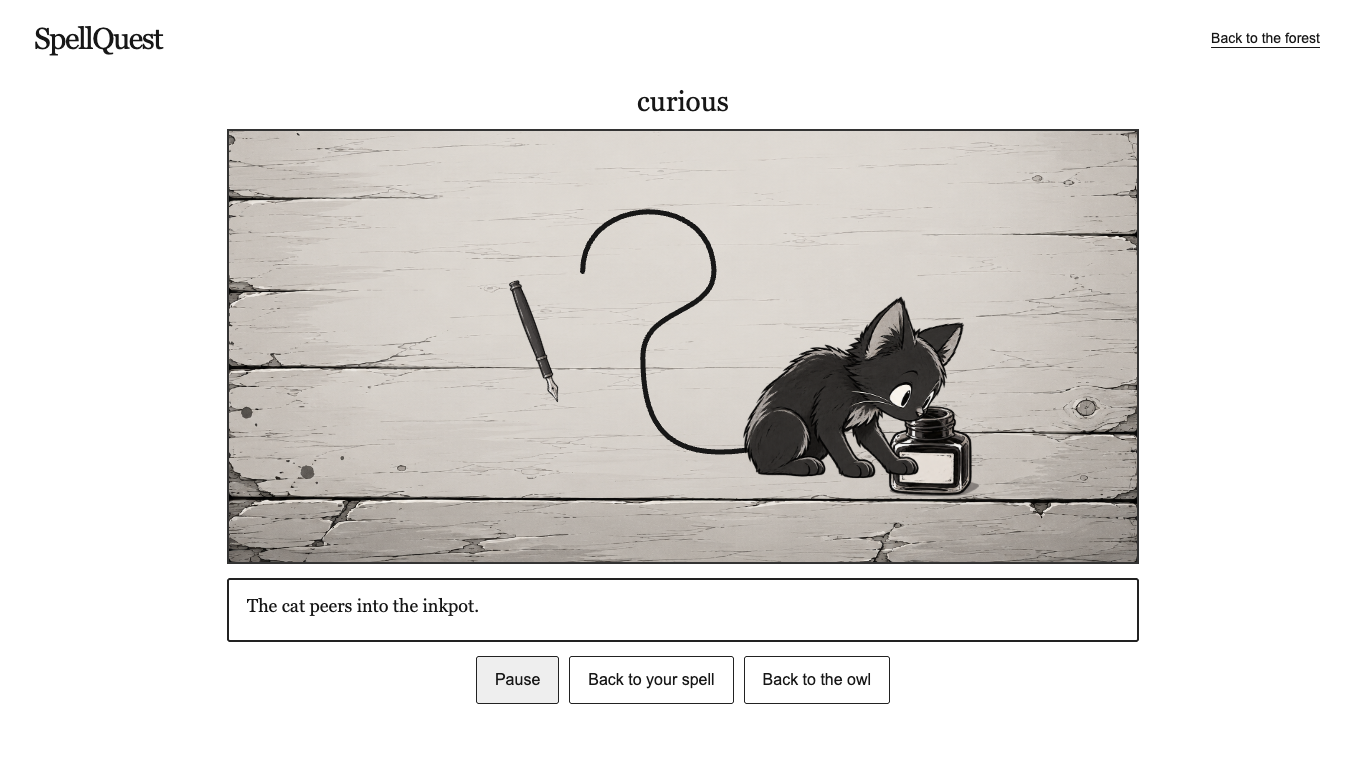
After a successful attempt, a question mark becomes an ink cat before returning to the pen. The reward connects to the meaning of curious.
Tracing and narrative are design choices here. Their contribution to spelling retention still needs testing.
The awakening sequence has pause, replay and reduced-motion support.
The route changed as the idea developed.
Earlier work explored a parent-led spelling app. I removed teacher-assigned lists from that direction because depending on updated school lists was a parent pain point.
I also explored reducing parent setup with the Eliminate, Automate, Simplify framework. Those onboarding flows and the wider multi-stage learning plan are earlier explorations, outside this playable level.
Earlier onboarding exploration
Parent signs in
Add a child profile
Begin a quest
The current prototype opens directly, without this account flow. The earlier idea included a broader age range; the current build is aimed at Years 5–6.
Research and learning design by James Spiller. Prototyped with AI coding assistance. These are design intentions and prototype decisions, not measured learning outcomes.
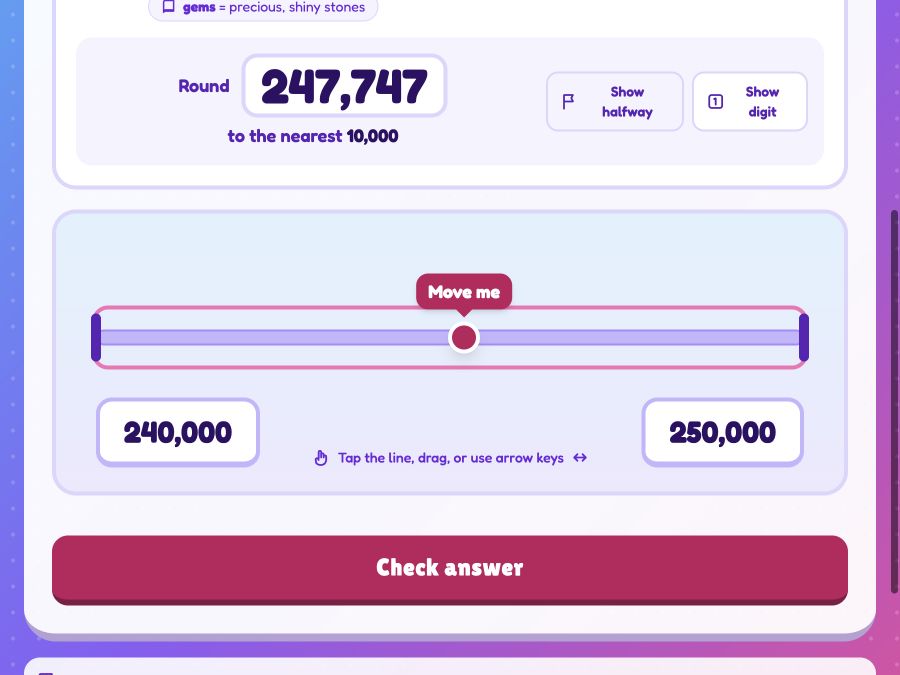
First, make the estimate.Some children answered without estimating. I made moving the marker part of the task.
12 of 30scored higher after the change.A classroom observation. Cause and lasting learning unproven.
Then confirm.The marker had to move before the answer could be confirmed.
The test needed work too.The questions took too long. Some children lost concentration.Next time: fewer, more focused questions.
A correct answer wasn’t enough.I watched where children paused, moved or skipped an action.
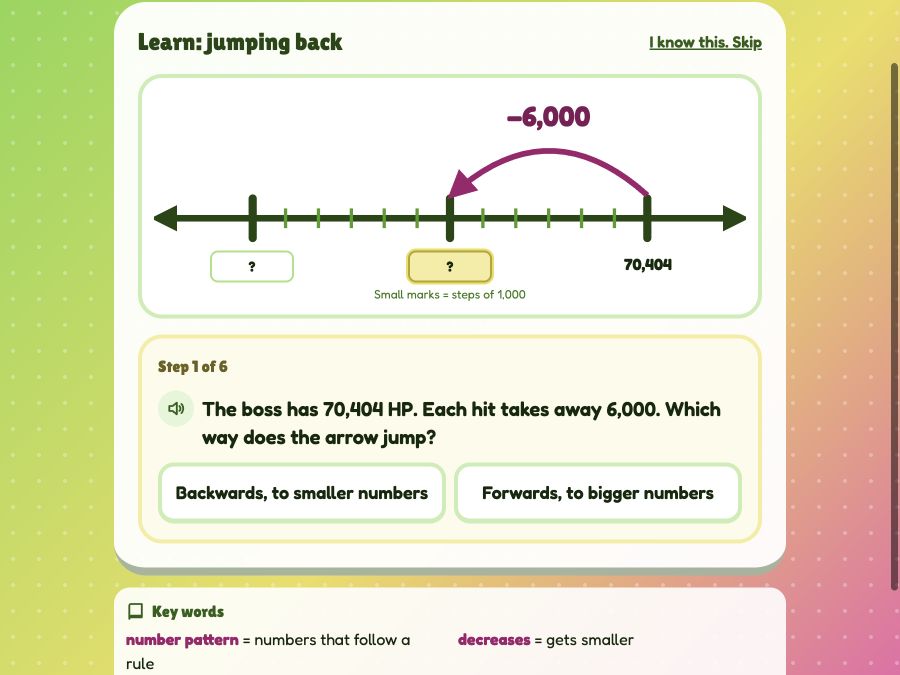
Testing, built into play.Children played independently while I gathered usability research.I set the tasks and chose the evidence. Built with AI coding assistance.
Next time: ask less.The questions took too long. Some children were losing concentration. Fewer, more focused questions next.
Research and learning design by James Spiller. Prototyped with AI coding assistance. Images show the actual apps.